RentCaddie
Property management, on your brand
Skip to content
Annual plans start at $27/month. 2 months free when you pay for the year. Start free →
Free tools

Security Deposit itemization letter

The letter you send after move-out: what came off the Security Deposit, why, and how much is going back. Every line has a reason and a piece of proof behind it, so the resident can read it and the conversation ends there.

Download the PDF3 pages · Free · No email required
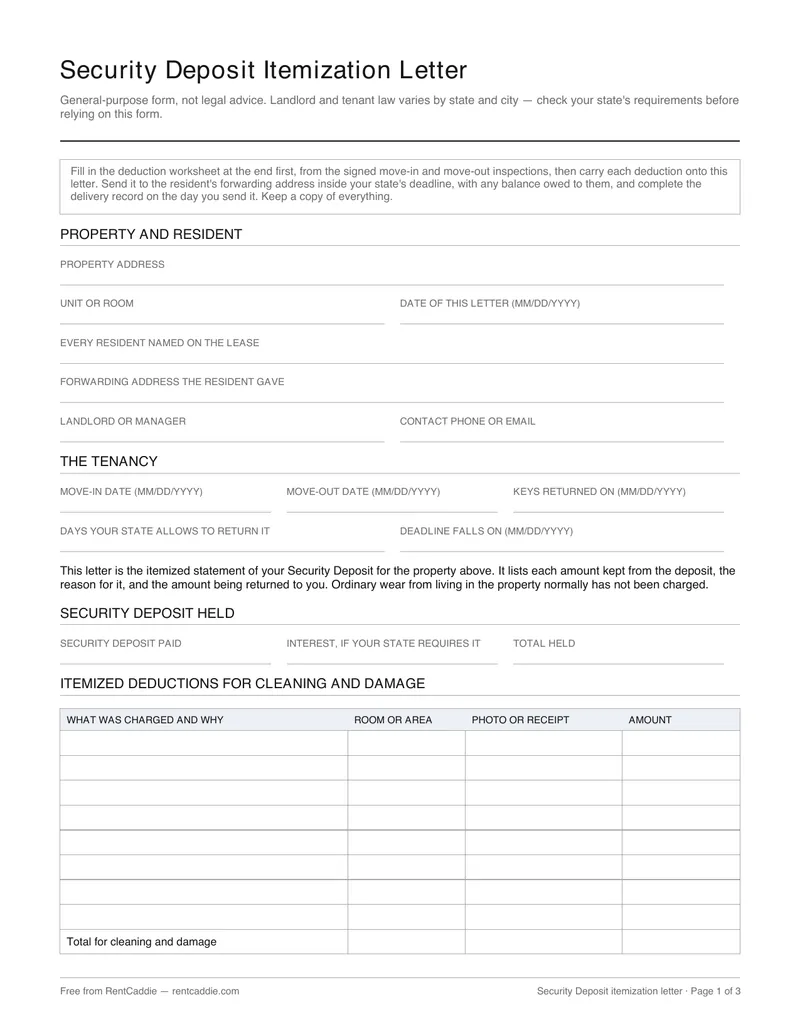
The first page of the Security Deposit Itemization Letter
Or skip the paper

Every step of this letter, done for you.

Cross out the paper. Here is what RentCaddie does instead, from the day they leave to the money going back.

  1. 1On paper: Look up your state's deadline

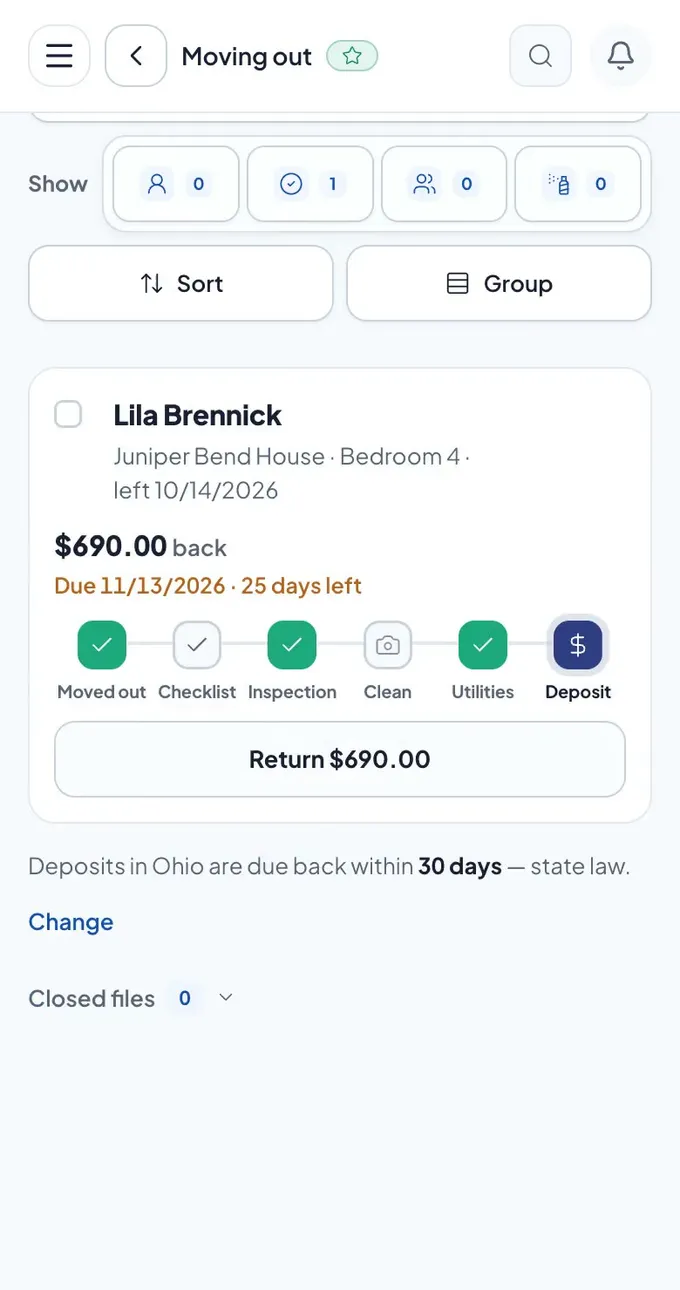
    In RentCaddie: When a move-out is recorded, a dated task to return the Security Deposit is made. The due date comes from the lease, your own setting for that state, or your state's law, with reminders before it is due.

  2. 2On paper: Find every charge from the move-out

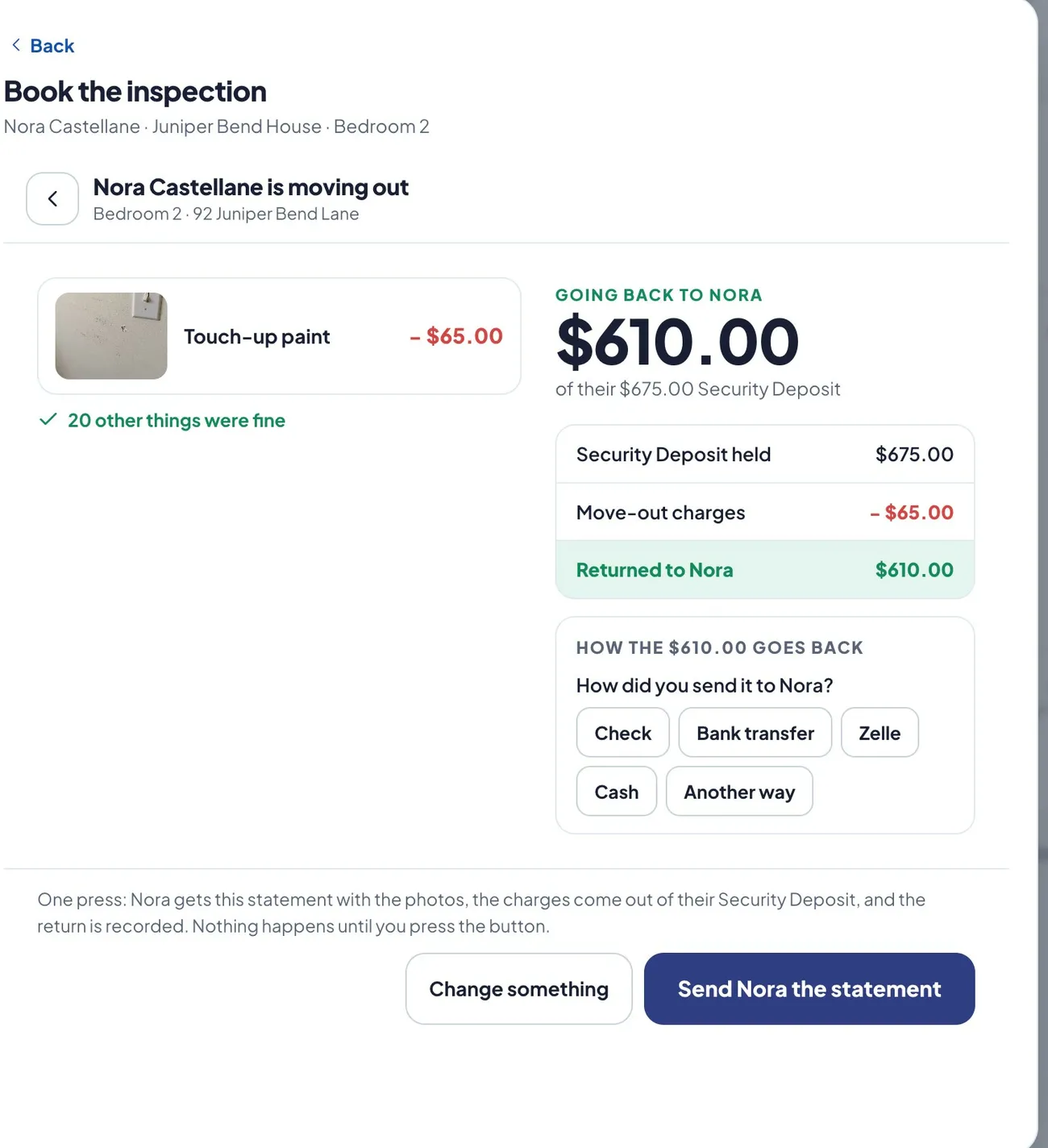
    In RentCaddie: Move-out charges, such as cleaning, damage and the final utility share, are already listed as lines coming off the deposit.

  3. 3On paper: Decide what to do about unpaid rent

    In RentCaddie: Rent and fees still owed from while they lived there are listed on their own, and are not taken from the deposit unless you switch that line on.

  4. 4On paper: Price each item by hand

    In RentCaddie: Each move-out inspection charge starts at the price in the Move-Out Fee Schedule your resident signed. You can change any amount and its words.

  5. 5On paper: Type up the itemized letter

    In RentCaddie: RentCaddie writes the itemized letter, with move-in and move-out photos beside each inspection charge. Preview it and edit the wording before it goes.

  6. 6On paper: Mail it and keep a copy

    In RentCaddie: Approve it and the letter is saved in their documents, they are told on their resident page, and it is emailed to them unless you say not to.

RentCaddie's Moving out page on a phone: a resident who has left, each step from moved out to the deposit, the amount going back with its due date, and the state's deadline.
Each move-out, with the deposit due date.
  • You send the money yourself. Say how, such as check, Zelle or cash, and what you kept and returned is recorded and the reminders stop.

Free until your first rent lands · up to 25 active leases · no credit card

What is on the form

  • The property, every resident on the lease, and the forwarding address they gave
  • Move-in, move-out and keys-returned dates, with your state's deadline written in
  • The Security Deposit held, with a line for interest where your state requires it
  • An itemized table for cleaning and damage: what, where, the proof and the amount
  • A separate table for any rent or fees you are allowed to take from the deposit
  • A summary: held, deducted, returned, and anything the resident still owes
  • How the balance is being sent, with the date and a check or reference number
  • A deduction worksheet comparing move-in and move-out condition, for your copy
  • A before-you-send checklist and a delivery record for the day it goes out

What the itemization letter has to do

Most states require a landlord to return the Security Deposit, or send a written list of what was kept and why, within a set number of days after the tenancy ends. Many also put a penalty on missing that deadline or on keeping money without a proper list. The letter is not a courtesy. In a lot of places it is the thing the law actually asks for.

A good letter answers every question before the resident can ask it. It names each deduction separately, says what it was for, says what the amount is based on, and adds up to the penny. One lump sum for "cleaning and damage" invites a dispute. Four lines, each with a room, a reason and a photo or receipt, usually does not.

  • One line per deduction, never a lump sum
  • A reason and a photo, receipt or estimate behind every line
  • Ordinary wear left off entirely
  • Totals that add up from held, to deducted, to returned

Work it out on the worksheet first

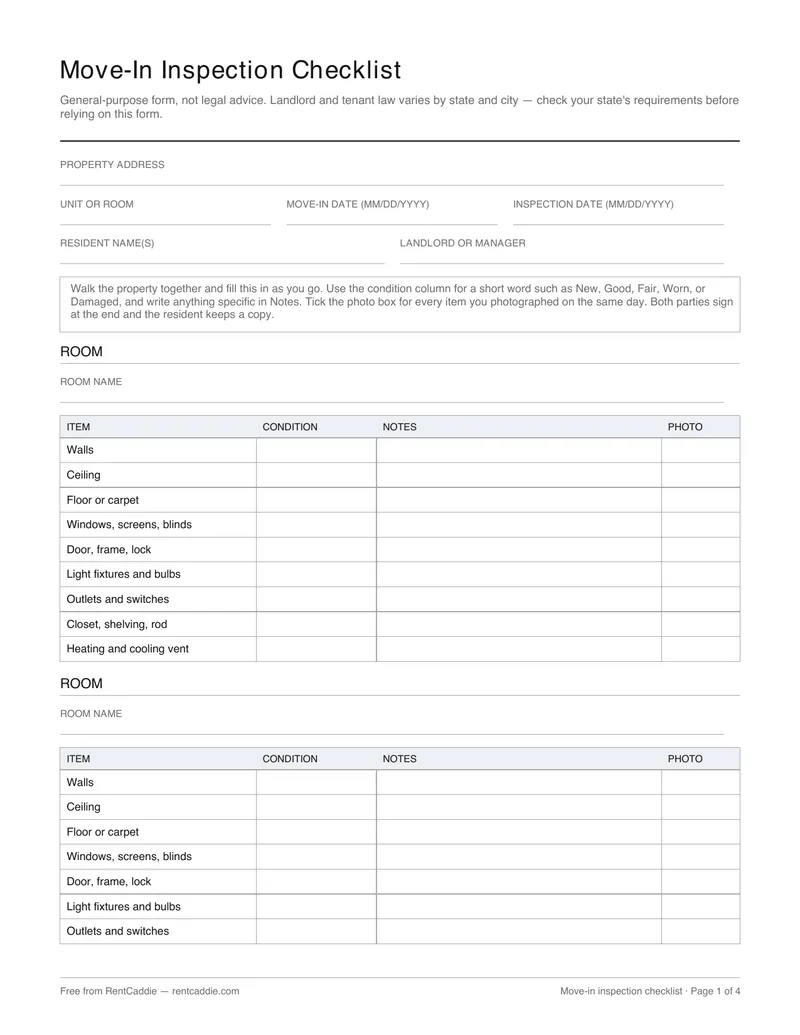
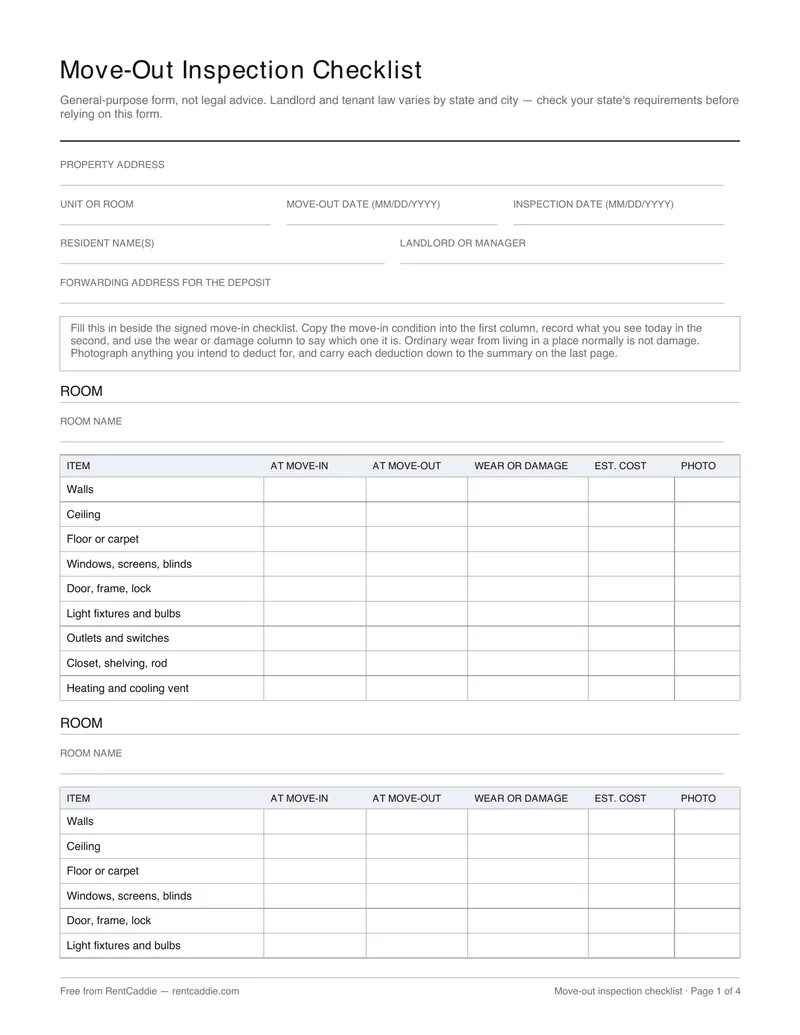
The last page is a worksheet that stays with you. Copy each item's condition from the signed move-in checklist, write what you found at move-out, and decide on the spot whether the change is ordinary wear or damage. Only damage, and cleaning beyond what the place needed when they moved in, carries over to the letter. The free move-in and move-out inspection checklists on this site line up with it row for row.

Keep rent and fees separate from cleaning and damage. Rent still owed is a debt from while they lived there, not a cost of them leaving. Some states let you take it from the deposit and some limit how. The letter gives it its own table so the resident can see exactly which money went where.

Check your own state's deadline and rules

Deposit law is state law, and cities sometimes add to it. How many days you have, whether they are counted from move-out or from the day keys came back, whether interest is owed, what has to be itemized, and how the letter must be delivered all vary. Look up your state on our free Security Deposit return deadline by state page, at rentcaddie.com/tools/security-deposit-return-deadline-by-state, which gives the deadline, what starts the count and a link to the law itself.

This letter is a general-purpose starting point, not legal advice and not written for any one state. Fill in the blanks to match your state's rules, and talk to a local attorney before you rely on it in a dispute.

Common questions

How long do I have to send a Security Deposit itemization letter?
That is set by your state and it varies widely, commonly a number of days after the tenancy ends or after the resident hands back possession. Some states also set a shorter window when nothing is kept. Look up your own state and treat the deadline as hard, because missing it can cost more than the deposit.
Can I take unpaid rent out of the Security Deposit?
Many states allow it when the lease does, but not all treat it the same way, and some limit what a deposit may be used for. That is why the letter lists rent and fees on their own table, apart from cleaning and damage. Check your lease and your state before you fill that table in.
Do I need receipts for every deduction?
Some states require receipts or estimates with the letter, or for amounts over a certain size, and some let the resident ask for them later. Either way, a deduction with a photo and a receipt behind it is far easier to defend than one without. The proof column on the letter is there so you never send a number with nothing behind it.
What if the resident left no forwarding address?
Send the letter to their last known address, which is often the rental itself, and keep proof of the date it went out. Many states treat that as meeting the deadline when no forwarding address was given. Record exactly what you did in the delivery record on the last page.

This form is a general-purpose starting point, not legal advice and not written for any particular state. Landlord and tenant law varies by state and often by city. Check your own state's requirements, and have an attorney review anything you plan to rely on in a dispute.