What a notice of entry needs to say
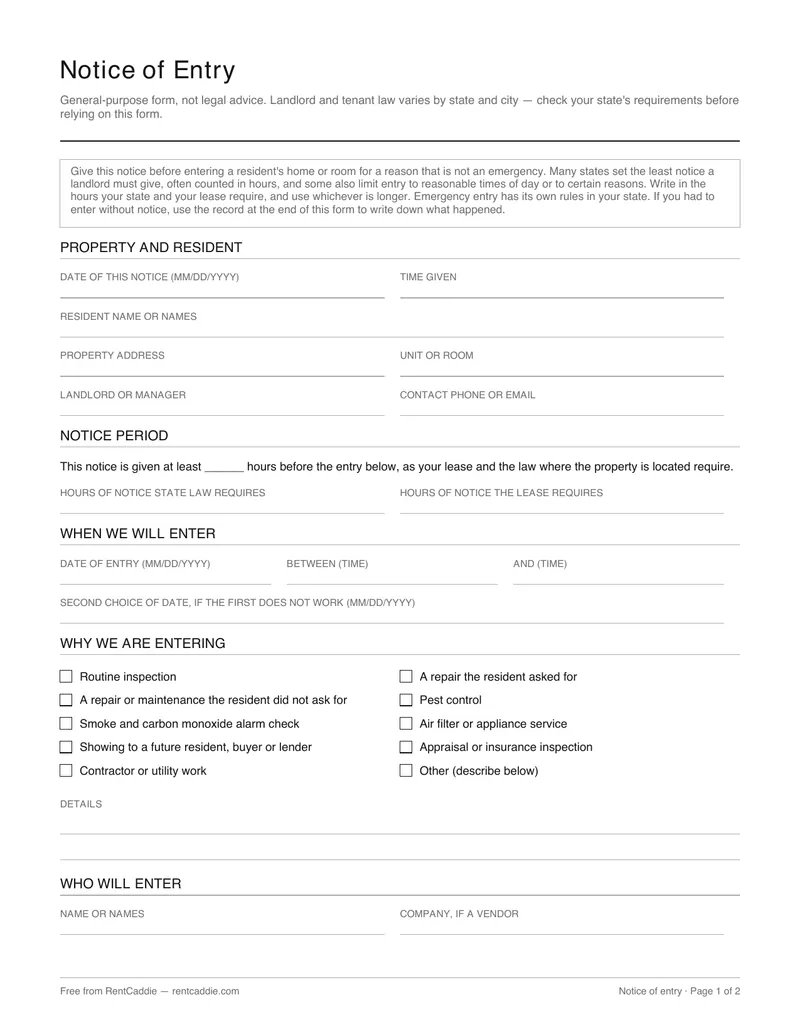
A good notice answers the four questions a resident has the moment they read it: when, why, who, and what do I need to do. Leave any of them out and you get a phone call, or worse, a resident who comes home to a stranger in their kitchen and feels their home was walked into.
Give a real time window rather than "sometime Tuesday", name the company if a vendor is coming, and say plainly whether anyone will go in if nobody is home. A resident who knows exactly what is happening rarely objects to it.
- The exact date, and a time window rather than a whole day
- The reason, in a sentence
- Who is coming, and whether you will be there
- How to ask for another time
- A record of when and how the notice was delivered
How much notice, and when you may enter
The least notice a landlord must give before a routine entry is set by state law, and it varies. Many states set a number of hours, often 24 or 48, some set more, and some only say the notice must be reasonable. Some also limit entry to reasonable hours of the day or to certain reasons. Your lease may promise more than the law requires, and then the lease is the promise you have to keep.
That is why the hours on this form are blank. Look up your own state's rule, read your lease, write in whichever is longer, and count from the moment the resident actually receives the notice, not the moment you wrote it.
Rooms in a shared home
When rooms are rented separately, each bedroom is its own resident's home. Entering one person's room needs notice to that person, not just a message in the house group chat. Whether you must also notify everyone before entering the kitchen or living room depends on your state and on what your lease says about the common areas, so check both and give notice to everyone who lives there when in doubt.
Emergencies and refusals
A fire, a burst pipe or a gas leak is not a scheduled visit, and states have their own rules for entering in an emergency. If you ever have to go in without notice, fill in the after-entry record the same day and tell the resident what happened and why.
If a resident refuses a properly noticed entry, do not force it. Write down what happened, offer another time, and if it keeps happening, check your state's rules or talk to a local attorney. This form is not legal advice.
Common questions
How much notice does a landlord have to give before entering?
Can I send a notice of entry by text or email?
Does a vendor need to give notice too?
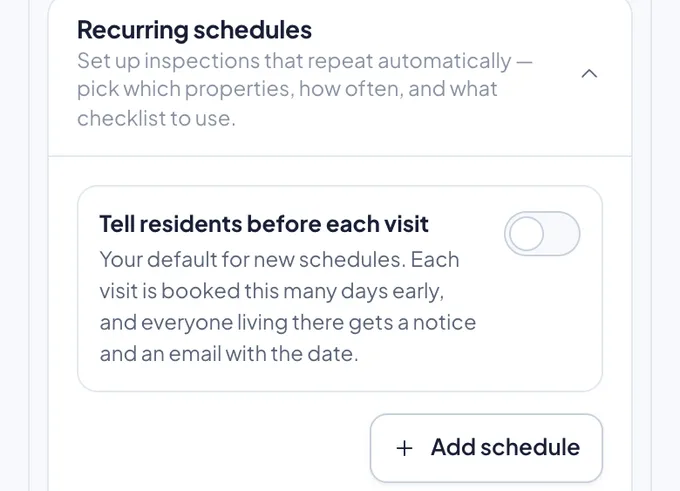
Does RentCaddie send a notice for every visit?
This form is a general-purpose starting point, not legal advice and not written for any particular state. Landlord and tenant law varies by state and often by city. Check your own state's requirements, and have an attorney review anything you plan to rely on in a dispute.