RentCaddie
Property management, on your brand
Skip to content
Annual plans start at $27/month. 2 months free when you pay for the year. Start free →
Free tools

Rent increase notice

Written notice that the rent is changing: from what, to what, and from which day. It also walks you through the checks that make a rent increase hold up, because the notice period and any limit on the increase are set by your state, your city and the lease.

Download the PDF2 pages · Free · No email required
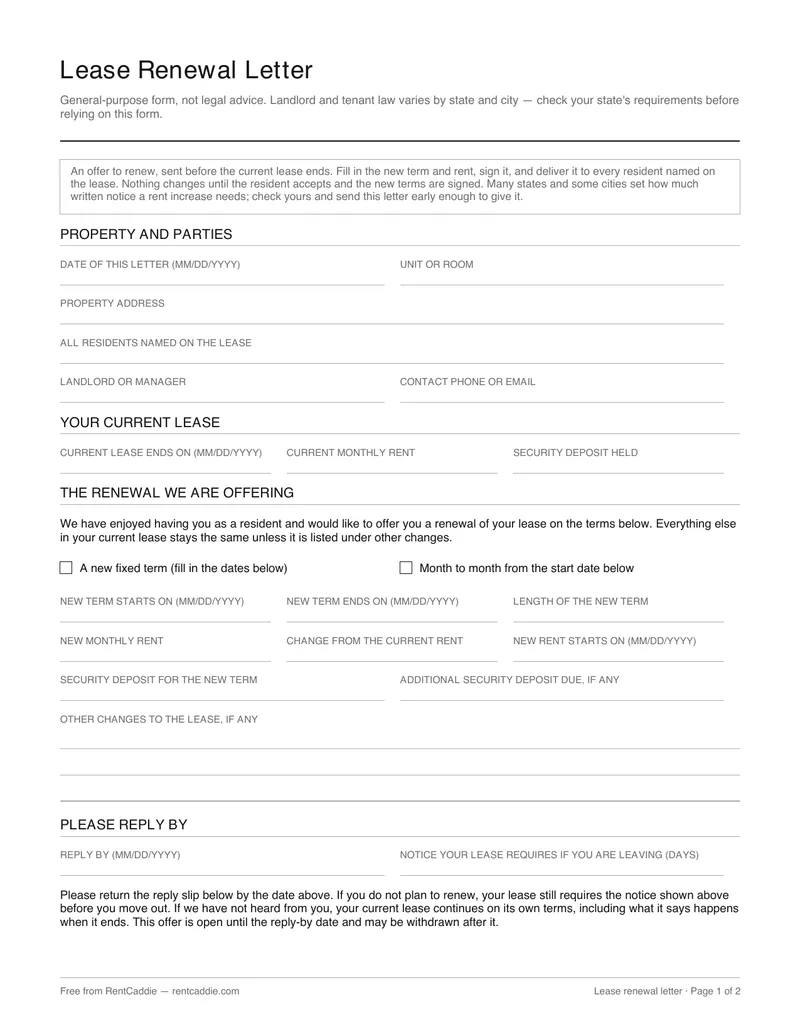
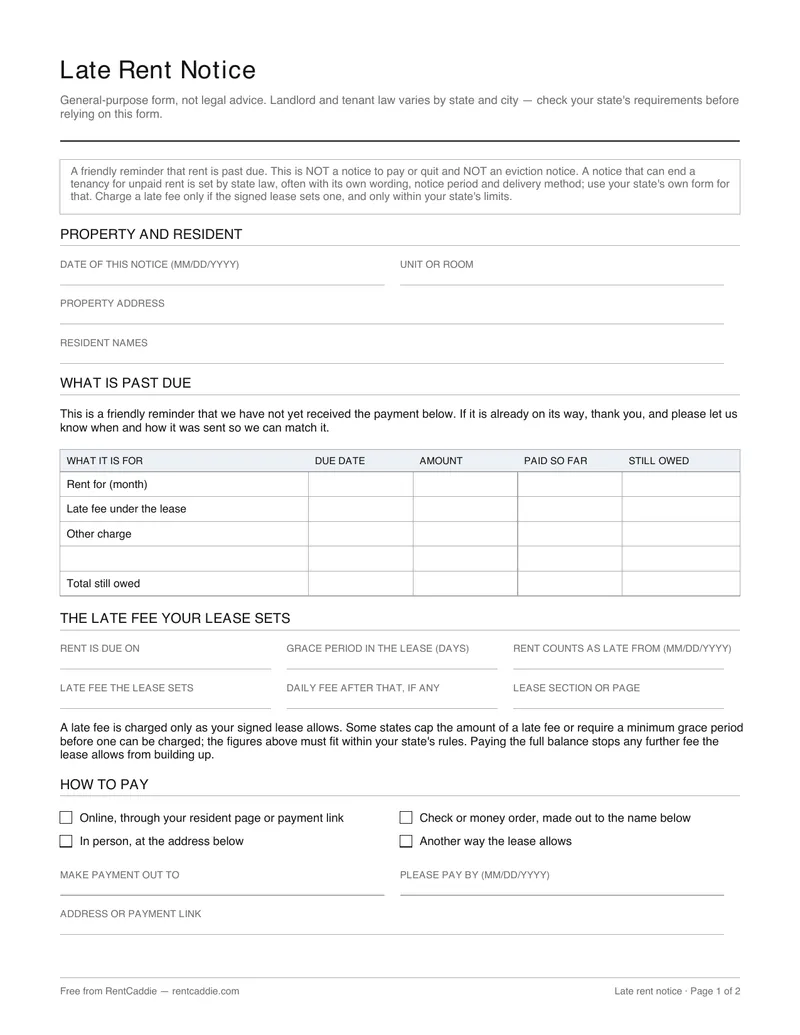
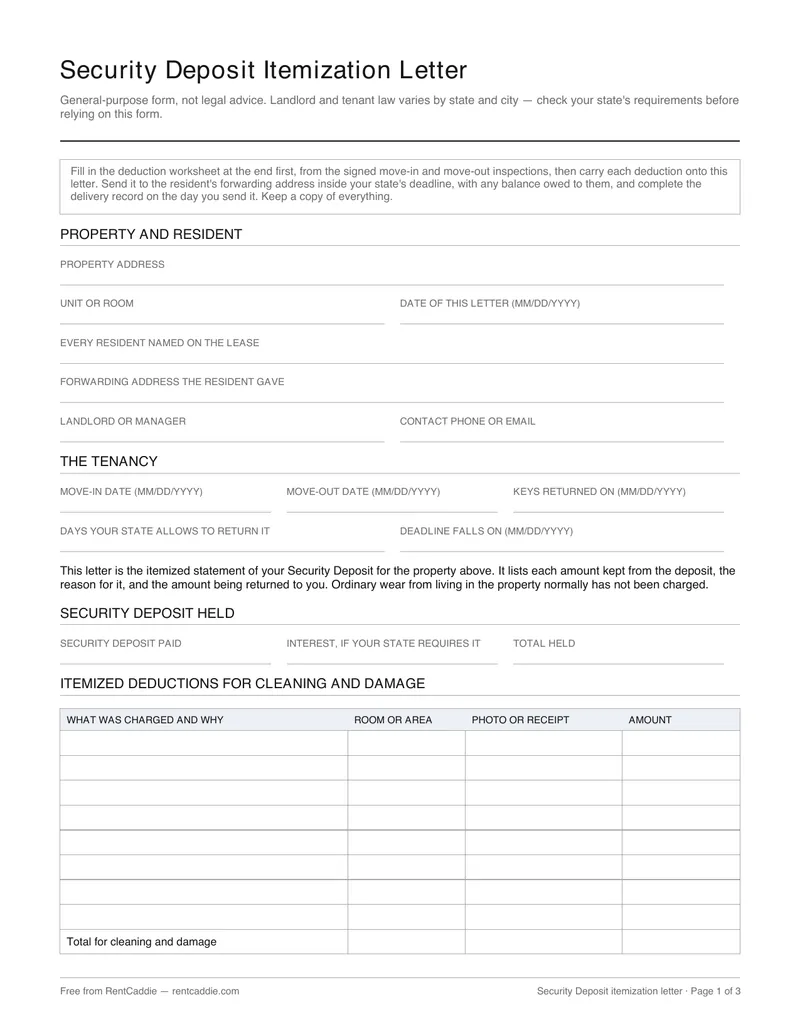
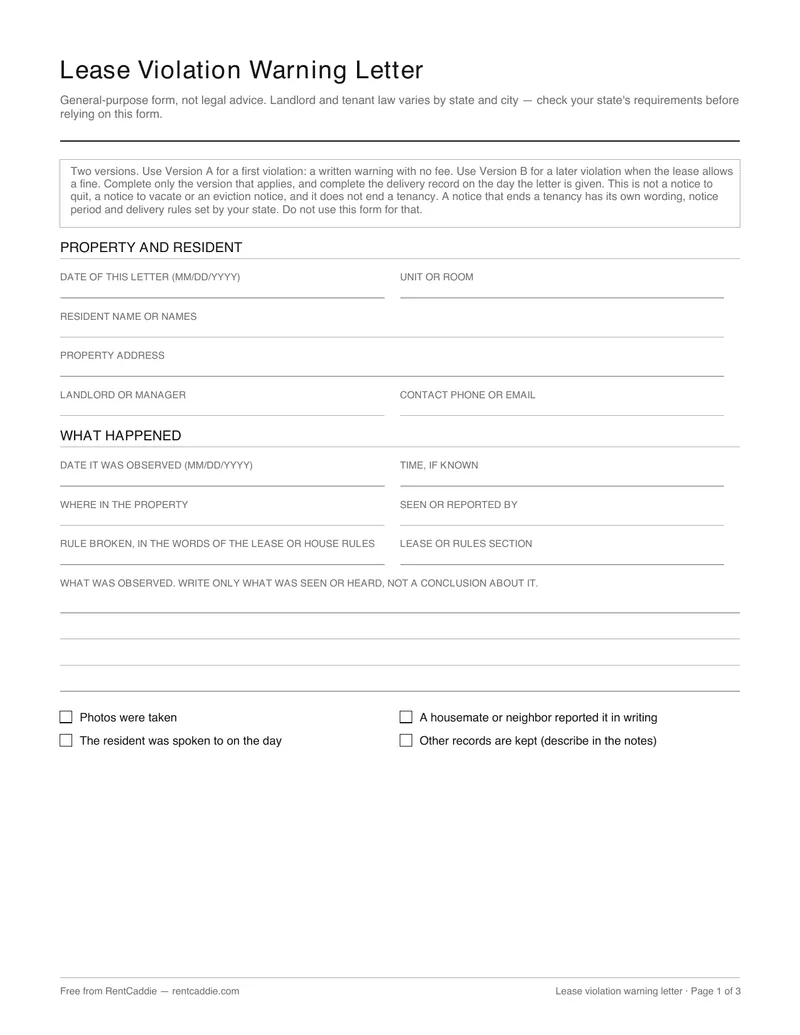
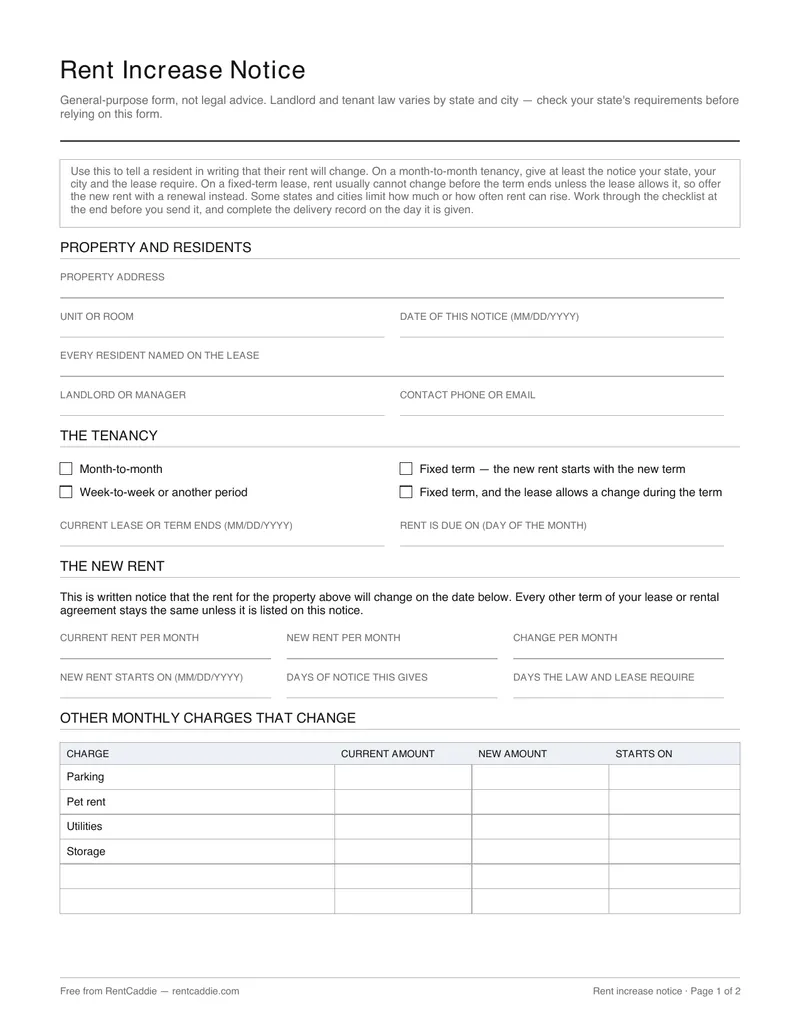
The first page of the Rent Increase Notice
Or skip the paper

Every step of this notice, done for you.

Cross out the paper. Here is what RentCaddie does instead, from the lease ending to the new rent billing.

  1. 1On paper: Remember when each lease ends

    In RentCaddie: RentCaddie tells you before each lease ends, so you can offer a renewal at the new rent.

  2. 2On paper: Work out the new rent

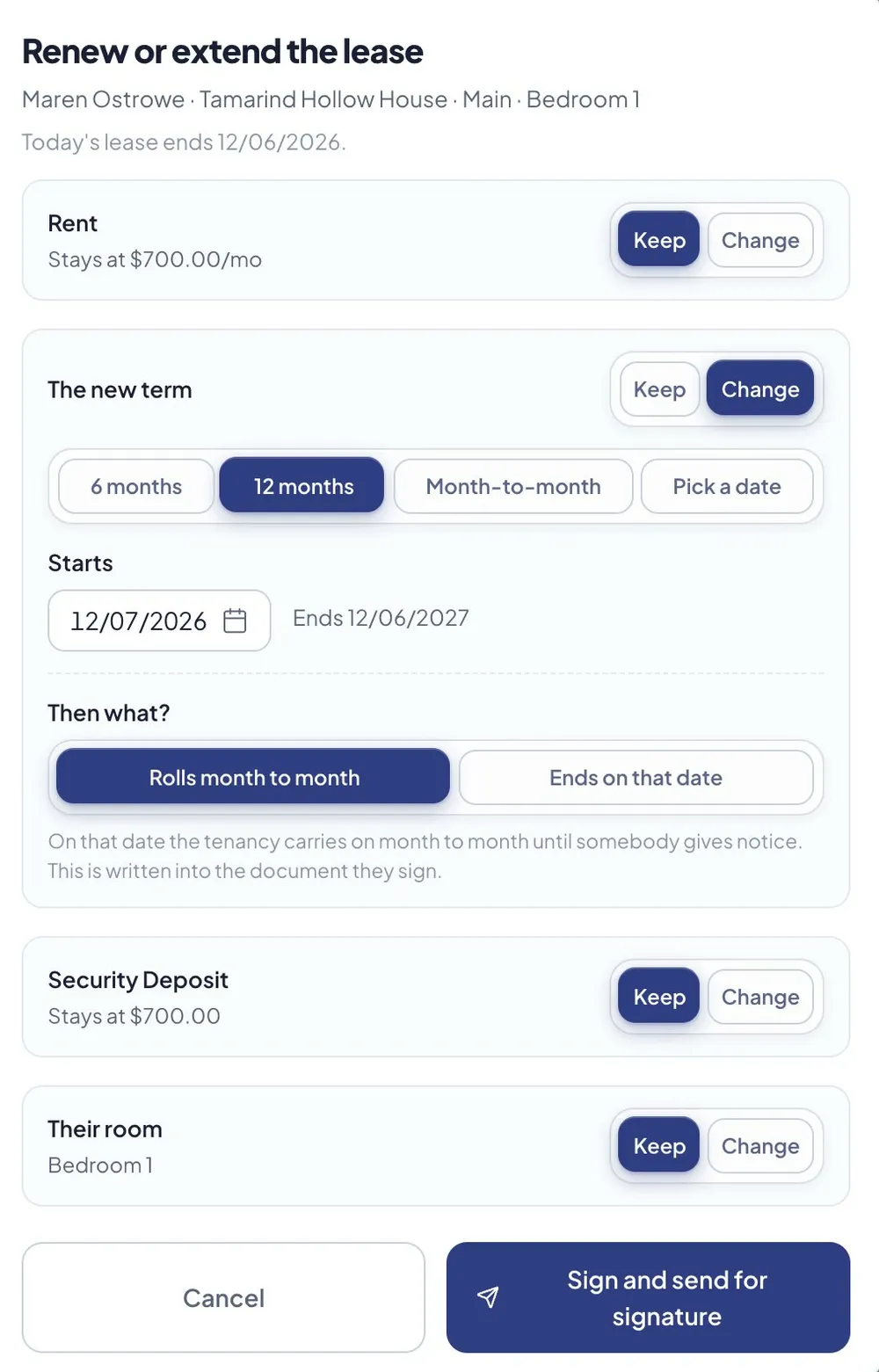
    In RentCaddie: Set your renewal increase once, as a percentage or a dollar amount, and each renewal offer opens at the new rent. You can change it before you send.

  3. 3On paper: Print and deliver the notice

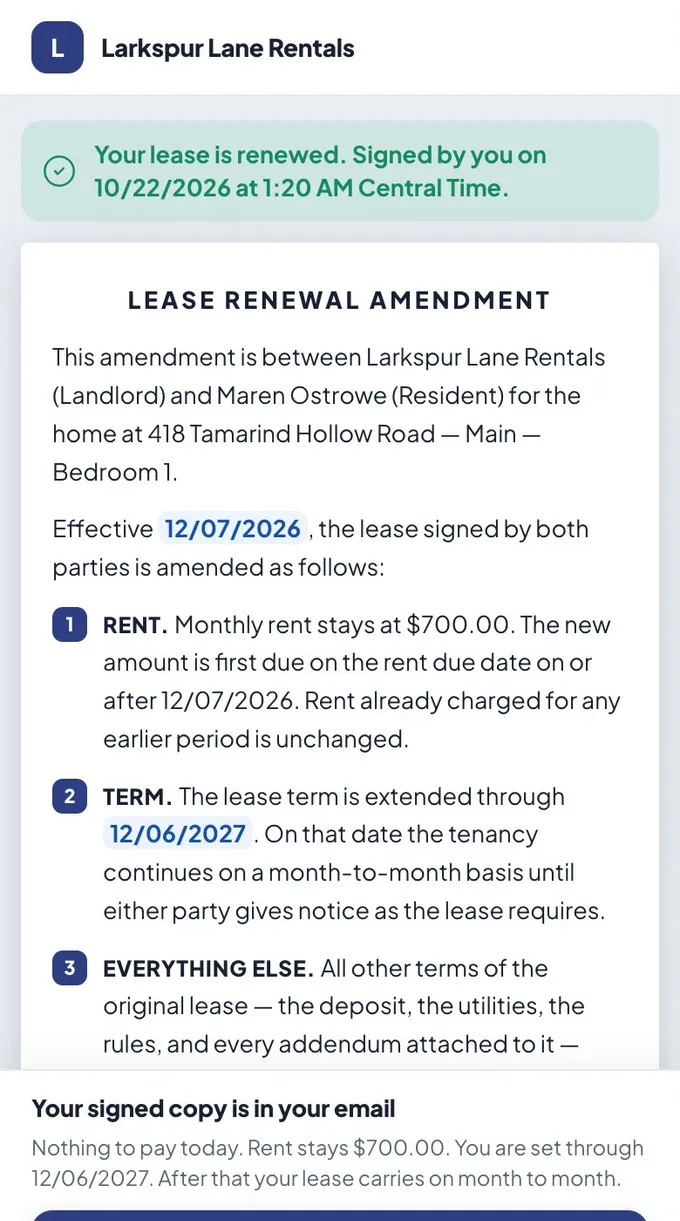
    In RentCaddie: Sign the renewal once and send it. Your resident gets a link to read it and sign on their phone.

  4. 4On paper: Chase a resident who has not answered

    In RentCaddie: A resident who has not answered gets a reminder, and you are told before the offer stops working.

  5. 5On paper: Change the rent in your records

    In RentCaddie: Once they sign, the new rent starts billing on the day the renewal begins, not before.

  6. 6On paper: Send notices to month-to-month residents

    In RentCaddie: Turn on month-to-month increases and each resident is emailed the new rent in their language. It starts on their first rent day after your notice period.

A resident's phone in RentCaddie after they signed their renewal: the new terms and a button to see their signed copy.
Your resident signs the new terms on their phone.
  • Month-to-month increases are off until you turn them on. When one is scheduled, you are told, and one tap on their record keeps that resident at the old rent.
  • If a notice could not go out in time, the new rent moves to the next rent day that allows it, and you are told it moved.

Free until your first rent lands · up to 25 active leases · no credit card

What is on the form

  • The property, unit or room, and every resident named on the lease
  • Whether the tenancy is month-to-month or a fixed term, and when the term ends
  • The current rent, the new rent and the change per month
  • The day the new rent starts, the days of notice given and the days required
  • A table for other monthly charges that change, such as parking or pet rent
  • Where and how rent is paid, and a line for anything else the resident should know
  • A landlord signature and an optional resident receipt that does not mean agreement
  • A before-you-send checklist covering notice, rent limits and fair treatment
  • A delivery record: hand delivered, posted, mailed or emailed, with the date

When you can raise the rent

On a month-to-month tenancy, rent can usually change with written notice given far enough ahead. On a fixed-term lease, the rent written in the lease normally holds until the term ends, unless the lease itself allows a change partway through. For most fixed-term residents, the right moment for a new rent is the renewal, when they can read the new figure and choose to sign for another term.

Start the new rent on a rent due day. An increase that begins partway through a month means a split bill, and a split bill is where arguments about what is owed begin. Pick the first rent day that falls after the full notice period, write that exact date on the notice, and the resident knows exactly what to pay and when.

  • Month-to-month: written notice, at least the period the law and lease require
  • Fixed term: usually at renewal, unless the lease allows a change sooner
  • Start on a rent due day, never partway through a period
  • Name every resident on the lease on the notice

What changes by state and city

Notice periods vary by state, and some states require more notice for a larger increase or for a resident who has lived there longer. A growing number of states and cities limit how much rent can rise in a year, or how often it can rise at all, and some require specific wording or a particular way of delivering the notice. A few places protect residents from an increase that follows a complaint or a repair request.

This notice is a general-purpose starting point, not legal advice and not written for any one state or city. The checklist at the end of the form lists the questions to answer for where your property is. Answer every one before you send it, and talk to a local attorney if your home is anywhere with rent limits.

Make the increase easy to accept

A good resident is worth more than most increases. Turnover means an empty room, cleaning, repairs and a new search, and a resident who feels surprised is more likely to leave than one who saw it coming. Give more notice than the minimum when you can, keep the increase in line with what similar homes nearby are renting for, and tell residents in the same situation the same thing at the same time.

Common questions

How much notice do I need to give before raising the rent?
Whatever your state, your city and the lease require, and the longest of those wins. Thirty days is common for month-to-month tenancies, but some places require more, especially for larger increases or longer tenancies. Look up your own rule before you pick the start date.
Can I raise the rent in the middle of a fixed-term lease?
Usually not, unless the lease says you can. The rent in a signed fixed-term lease is part of the agreement for the whole term. The usual path is to offer the new rent with a renewal before the term ends, so the resident can decide whether to sign for another term at that figure.
Is there a limit on how much I can raise the rent?
In many places there is no limit, but a growing number of states and cities cap increases or require a reason for them, and some exempt newer buildings or small landlords. Check the rules for the exact city and state where the home is, not only the state, before you choose the new figure.
Does the resident have to sign the rent increase notice?
Generally no. A notice is something you give, not an agreement they sign. The optional receipt line on the form only records that they received it, which can help if delivery is ever questioned. A renewal at a new rent is different, because the resident signs the new term.

This form is a general-purpose starting point, not legal advice and not written for any particular state. Landlord and tenant law varies by state and often by city. Check your own state's requirements, and have an attorney review anything you plan to rely on in a dispute.