When to use a notice of non-renewal
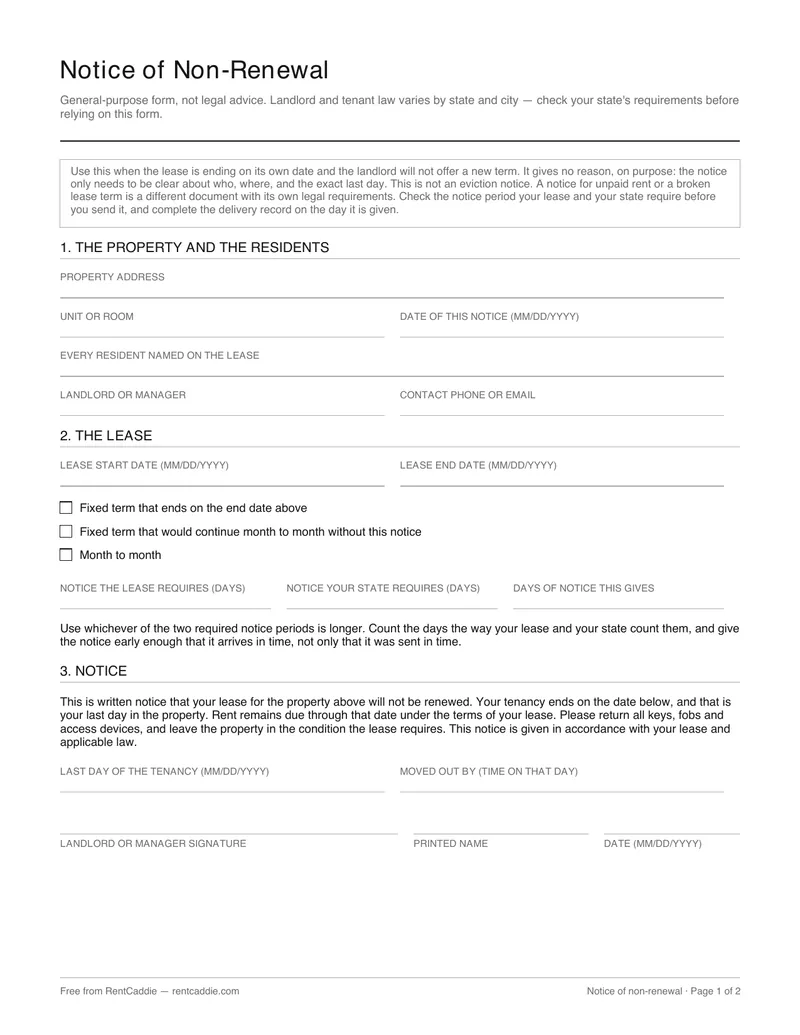
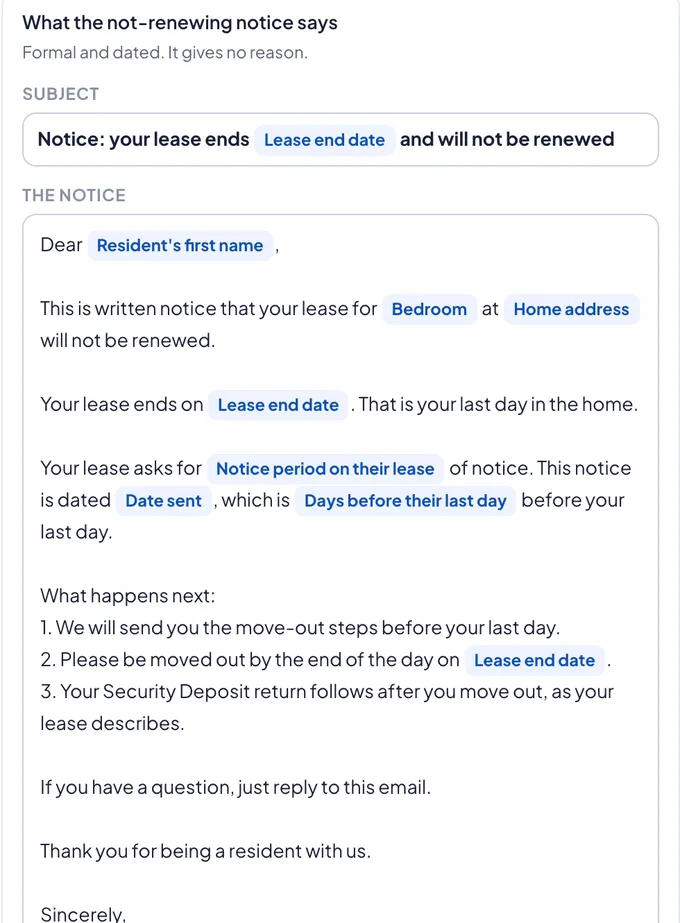
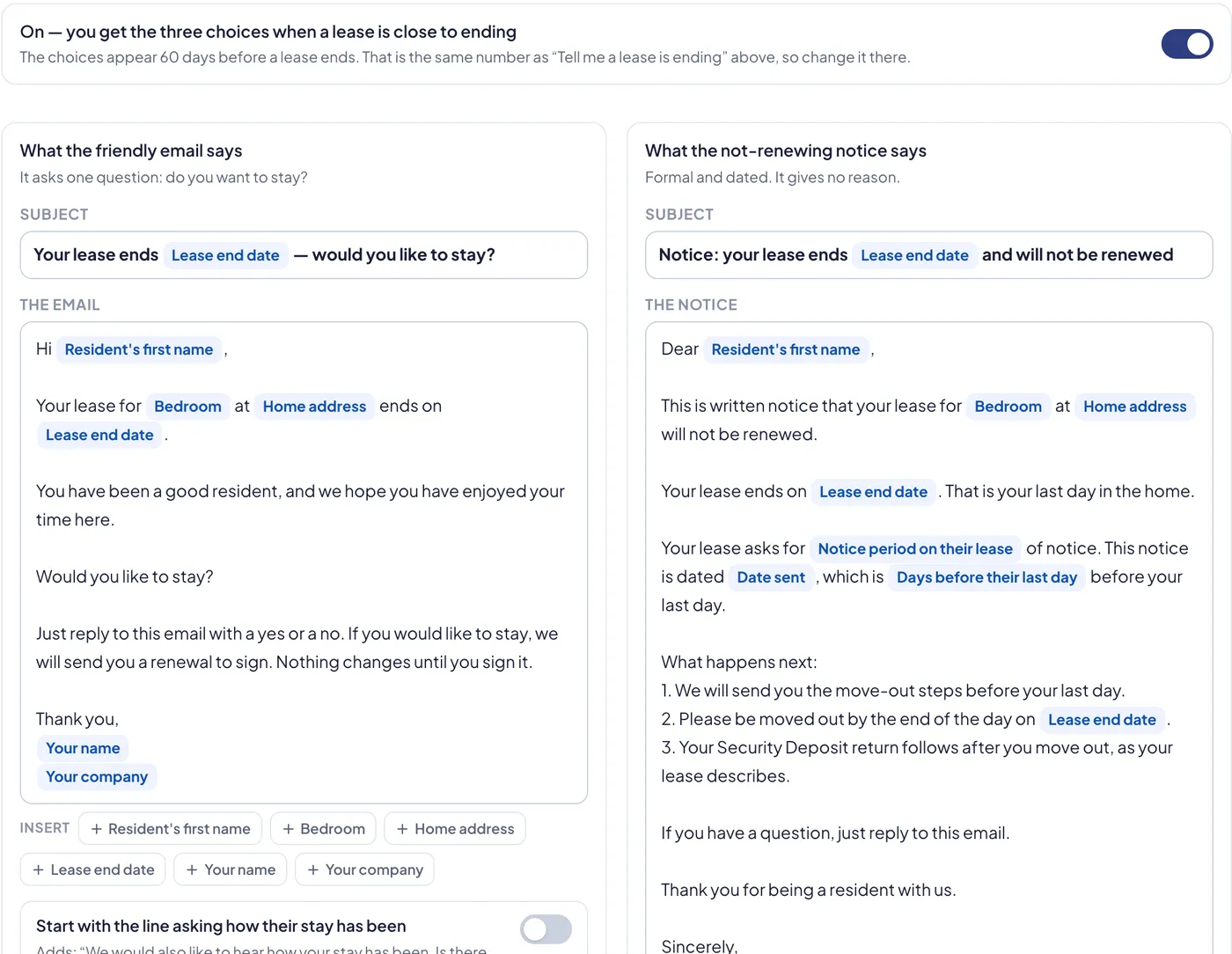
Use it when a lease is coming to the end of its term and you will not offer another one. You might be selling, moving family in, renovating, changing how the home is rented, or simply choosing not to continue. Whatever the reason, this notice does one job: it tells the resident, in writing and on time, the exact day their tenancy ends.
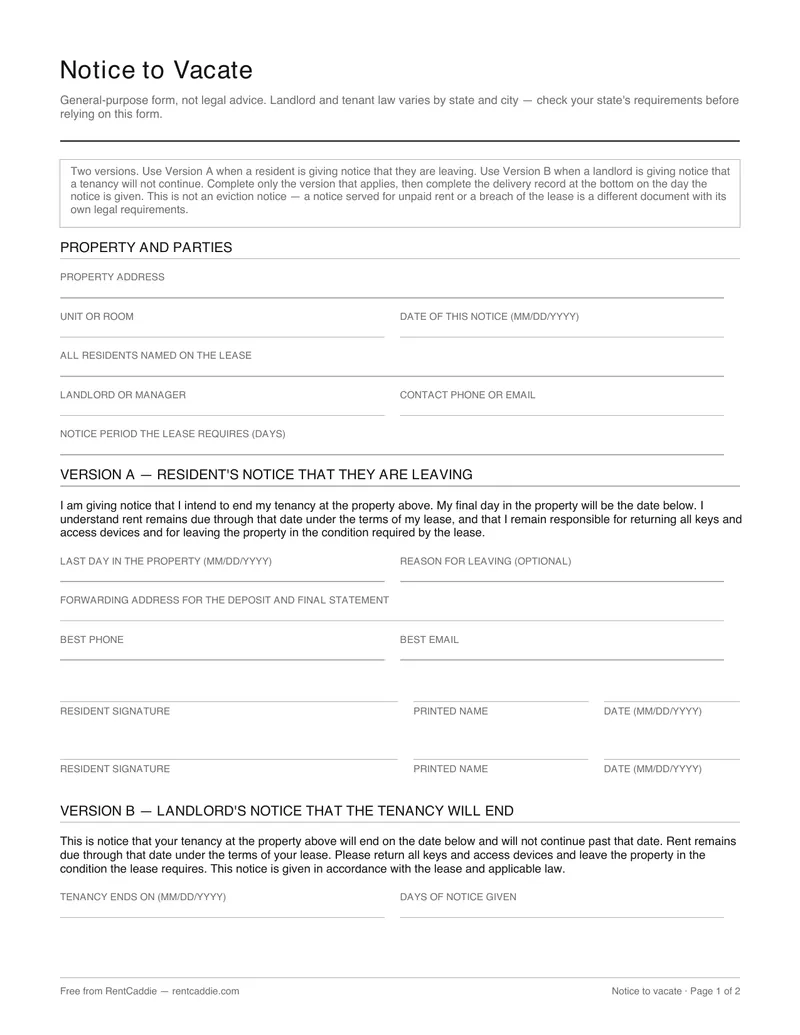
If a resident is the one leaving, they give you a notice to vacate instead. The free notice to vacate template on this site has a version for that, and a shorter landlord version too. This form is the landlord's notice on its own, with more room for the lease details, the notice periods and the delivery record that decide whether it holds up.
- Name every resident on the lease, not only the one you usually talk to
- Give an exact date, never "the end of next month"
- Use whichever notice period is longer, the lease's or your state's
- Fill in the delivery record on the day you deliver it
Why it gives no reason
In most places a landlord does not have to give a reason for not renewing a lease that is ending on its own date. Writing one in adds risk and nothing else. A reason can be argued with, and a reason that touches anything a fair housing law protects, or that follows soon after a resident complained or asked for a repair, can turn an ordinary ending into a claim of discrimination or retaliation.
So the form says what is happening and when, and stops there. If a resident asks why, you can talk to them, but the written notice does not need to carry it. Some cities and a few states limit when a landlord may decline to renew and require a stated reason from a set list. If you rent in one of those places, this form is not enough on its own.
This is not an eviction notice
A notice of non-renewal ends a tenancy at the end of its agreed term. A notice served because rent is unpaid or a lease term was broken is a different document, with different notice periods and, in most states, required wording and a required way of delivering it. Do not use this form for that.
If the resident does not move out after the last day on this notice, that is the point to talk to a local attorney rather than send another form.
Check your own state's requirements
How much notice a landlord must give, and how it must be delivered, is set by state law and sometimes by the city. It can depend on how long the resident has lived there and whether the lease is a fixed term or month to month. Some leases continue month to month automatically unless someone gives notice. This is a general-purpose form, not legal advice. Confirm your notice period and delivery rules before you rely on it.
Common questions
How much notice do I have to give that I am not renewing?
Do I need to send a notice if the lease already has an end date?
Can I send a notice of non-renewal by email?
Can I take a notice of non-renewal back?
This form is a general-purpose starting point, not legal advice and not written for any particular state. Landlord and tenant law varies by state and often by city. Check your own state's requirements, and have an attorney review anything you plan to rely on in a dispute.