What a pet addendum is for
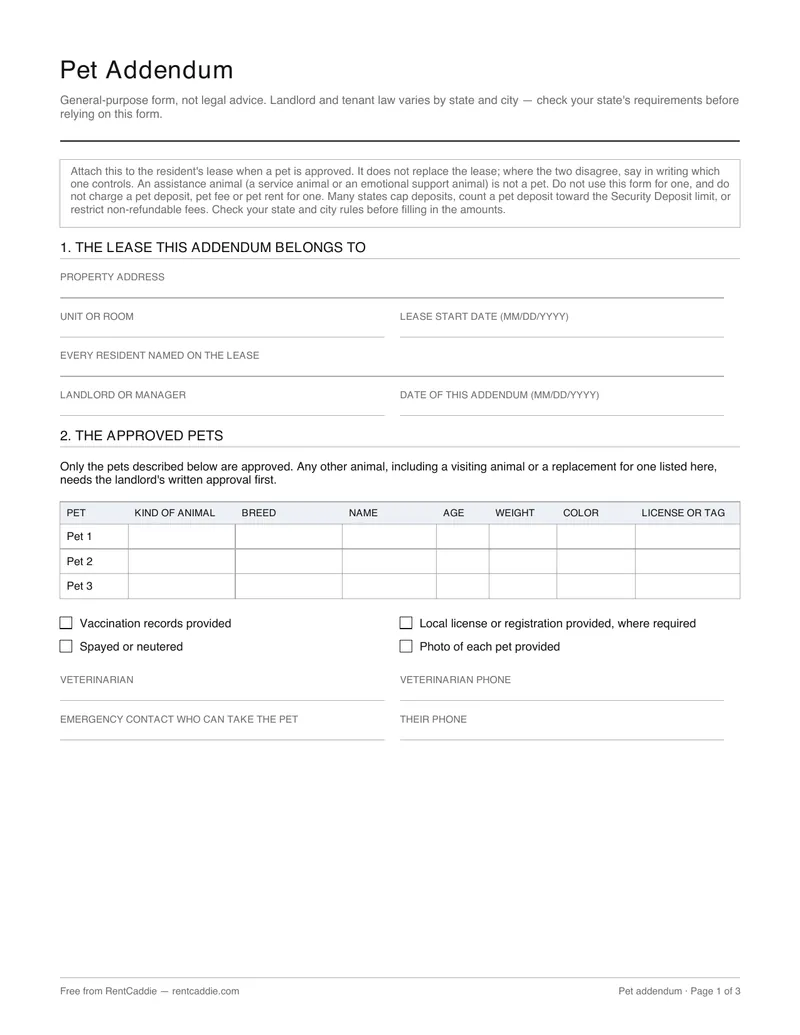
A lease usually says either "no pets" or "pets only with written approval". The pet addendum is that written approval. It names the exact animal you approved, so a second dog or a friend's cat is clearly not covered, and it puts the money and the rules for that animal in writing, signed, before it moves in.
Attach one to the lease of every resident who has an approved pet, and keep a photo of each animal with it. When a different animal turns up, or the pet causes damage at move-out, the addendum is what you point to.
- Describe each pet well enough that someone else could recognize it
- Fill in only the charges your state allows
- Write down where the pet may not go in a shared home
- Have every resident on the lease sign it, not only the owner of the pet
Pet deposit, pet fee and pet rent
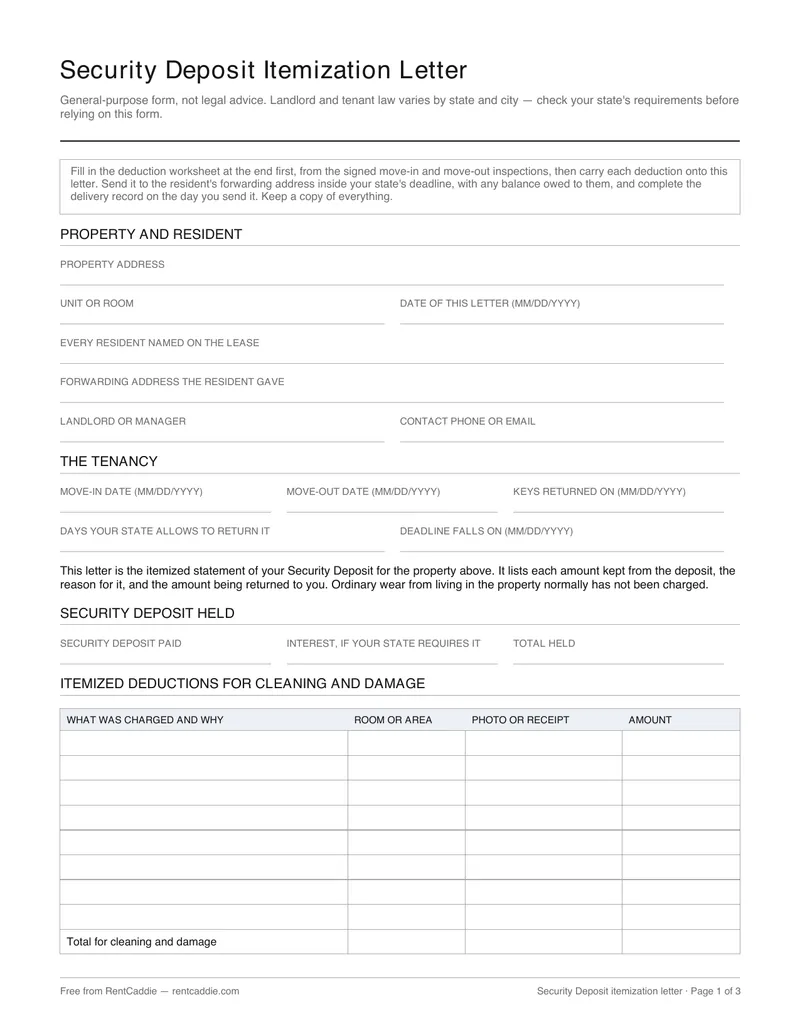
These are three different things. A pet deposit is refundable money held against damage, and it is usually handled like the Security Deposit at move-out. A pet fee is a one-time charge that is not returned. Pet rent is a monthly amount added to the rent. Many landlords use one or two of them, not all three.
State and city law decides which you may charge and how much. Some states cap the total of all deposits, pet deposit included. Some do not allow non-refundable fees at all. That is why every amount on the form is a blank, and why the form says the pet deposit does not limit what the resident owes when damage costs more.
Assistance animals are not pets
Under fair housing rules, a service animal or an emotional support animal that a person needs because of a disability is not a pet. You may not charge a pet deposit, pet fee or pet rent for one, and a no-pets rule or a breed or weight limit does not automatically apply. The resident is still responsible for damage the animal actually causes.
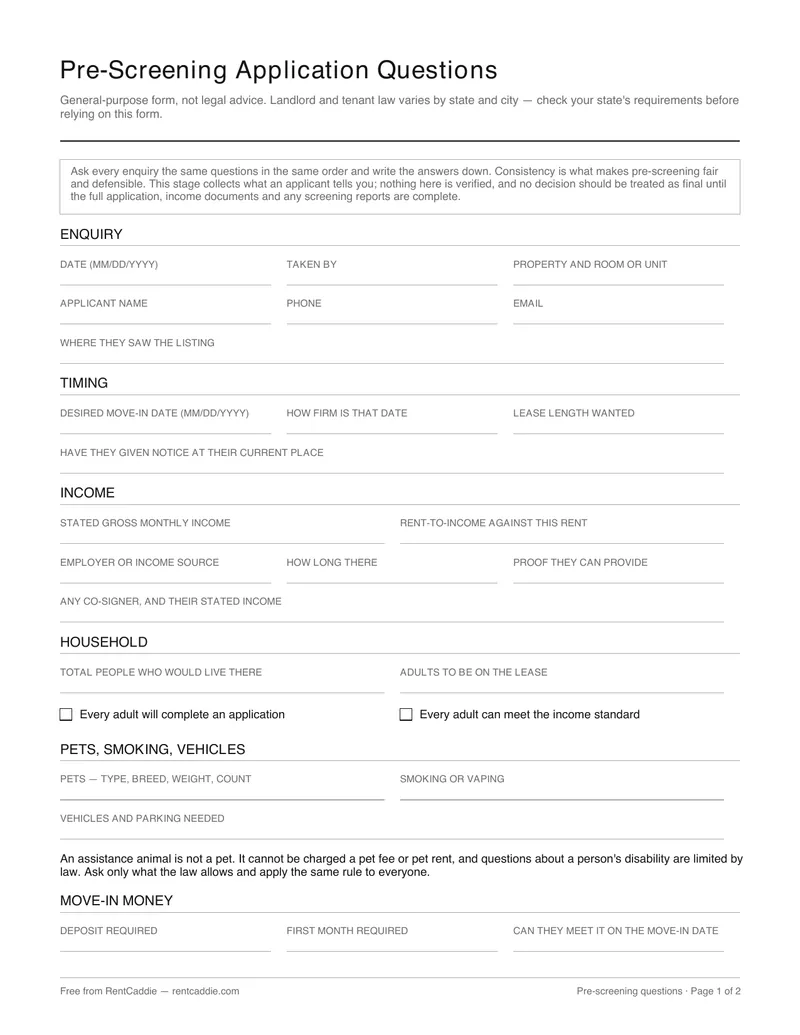
A request for an assistance animal is a request for a reasonable accommodation, and it is handled on its own, not with this addendum. What you may ask about the person's disability is limited by law. Treat every request the same way and get local guidance when you are unsure.
Check your own state's requirements
Deposit limits, whether a pet deposit counts toward them, non-refundable fees, dangerous dog rules and local licensing all vary by state and city. This is a general-purpose form, not legal advice. Check your state's requirements before you fill in the amounts, and have an attorney review it if you plan to rely on it in a dispute.
Common questions
Can I charge both a pet deposit and pet rent?
Can I refuse a pet because of its breed or size?
Can the pet deposit pay for damage the pet caused?
What if a resident gets a pet without asking?
This form is a general-purpose starting point, not legal advice and not written for any particular state. Landlord and tenant law varies by state and often by city. Check your own state's requirements, and have an attorney review anything you plan to rely on in a dispute.