Ask the same questions, in the same order, every time
Pre-screening exists so that neither side pays for a process that was never going to work. If somebody needs to move in three weeks and your room is free in eight, both of you find out in ninety seconds instead of after a fee, a showing, and a screening report.
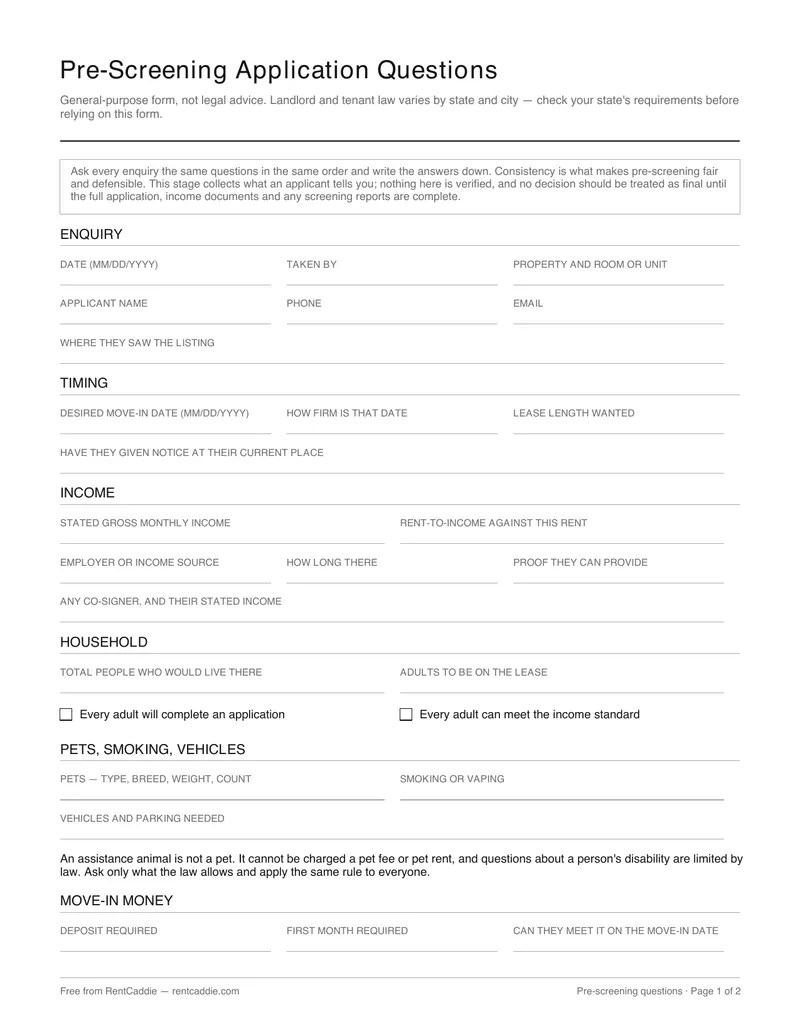
The discipline that makes it safe is consistency. Use one written sheet, ask every enquiry the same questions in the same order, and record the answers. A conversation that wanders differently with each caller is exactly the situation fair-housing complaints come out of, because you have no record of having treated people the same way.
- One sheet, same questions, same order, every enquiry
- Write the answers down as they are given
- Publish your rental criteria and share them before anyone pays
- Keep the sheets, so you can show how each applicant was treated
The questions you must not ask
Federal fair housing law prohibits decisions based on race, colour, national origin, religion, sex, familial status, or disability, and many states and cities add further protected classes such as source of income, age, marital status, or sexual orientation. The safest rule is to ask about the tenancy, never about the person.
So: ask how many people will live there, not whether they have children. Ask whether every adult can meet the income standard, not where they are from. You may ask whether an animal is a pet and charge pet fees on a pet, but assistance animals are not pets, cannot be charged for, and questions about a disability are off limits beyond the narrow ones the law allows. The downloaded sheet carries this reminder on the form itself, where it is useful, rather than in a policy document nobody re-reads.
Where pre-screening ends and screening begins
Pre-screening is stated facts. It is not verification, and none of it should be treated as proven. The application, the income documents, the reference checks, and any credit or background report come afterwards, and those are the steps that decide whether somebody is approved.
Anything that looks like a consumer report carries its own set of rules about consent and about what you must tell an applicant if you turn them down because of it. Keep the two stages separate: this sheet decides who is worth an application, the application decides who gets the keys.
Common questions
What can I legally ask a prospective tenant?
Should I charge an application fee?
Can I ask why they are moving?
Do I have to tell applicants my criteria in advance?
This form is a general-purpose starting point, not legal advice and not written for any particular state. Landlord and tenant law varies by state and often by city. Check your own state's requirements, and have an attorney review anything you plan to rely on in a dispute.